|

Allium fistulosum, Lilaceae
| Also known as cibol, this aromatic plant
originated in southwestern Siberia. Although it has been cultivated in
China for over 2,000years, it was not introduced in to Europe until the
16 century.
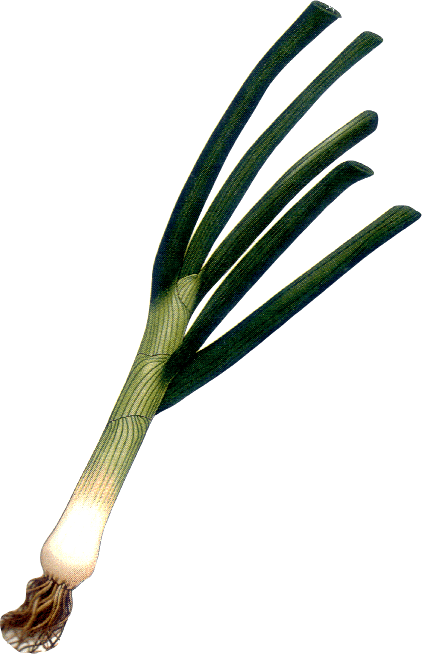
Scallions do not form a bulb as such, although the base of the plant
is slightly swollen. The white shaft of the plant, which extends from
the root to the leaves, is fleshier and longer than that of chives. The
long green leaves are slender and hollow; they can grow as 5 feet but
are usually between 1 and 2 feet in height. Scallion has a slightly hot
flavor that is milder than the common onion but stronger than chives.
There are several varieties of this plant. |
 |
Buying
Choose Scallions with fresh, evenly green leaves and a pleasant odor. |
Preparing
Cut the stems of scallions into small pieces with scissors or chop
them with a knife. |
Serving Ideas
The green part of this plant is often included in the family of fines
herbs and is used to season a wide variety of dishes, both warm and
cold. It is used as a flavoring and as a garnish in vinaigrettes,
mayonnaise, salad, dips, vegetables, soups, sauces, cheeses, omelets,
pastas, tofu, fish, seafood, meat, and poultry. For maximum flavor, it
is best to add it at the end of cooking. The leaves can substitute for
chives, but should be used in smaller quantities. the white shaft of
scallions is used like the common onion. |
Storing
Scallions will keep for a few days in the vegetable drawer of the
refrigerator. they freeze well and do not need to be blanched
beforehand. Freezing is a better method of preserving this vegetable
than drying. |
| water |
90.5% |
| protein |
1.9g |
| fat |
0.4g |
| carbohydrates |
6.5g |
| fiber |
1.7 |
| calories |
34 |
| |
per 100g |
| Raw Scallion is good source of vitamin C and potassium;
it also contains A, iron, folic acid, zinc, and phosphorus. Scallion
juice is used to relieve intestinal ailments. |
|

